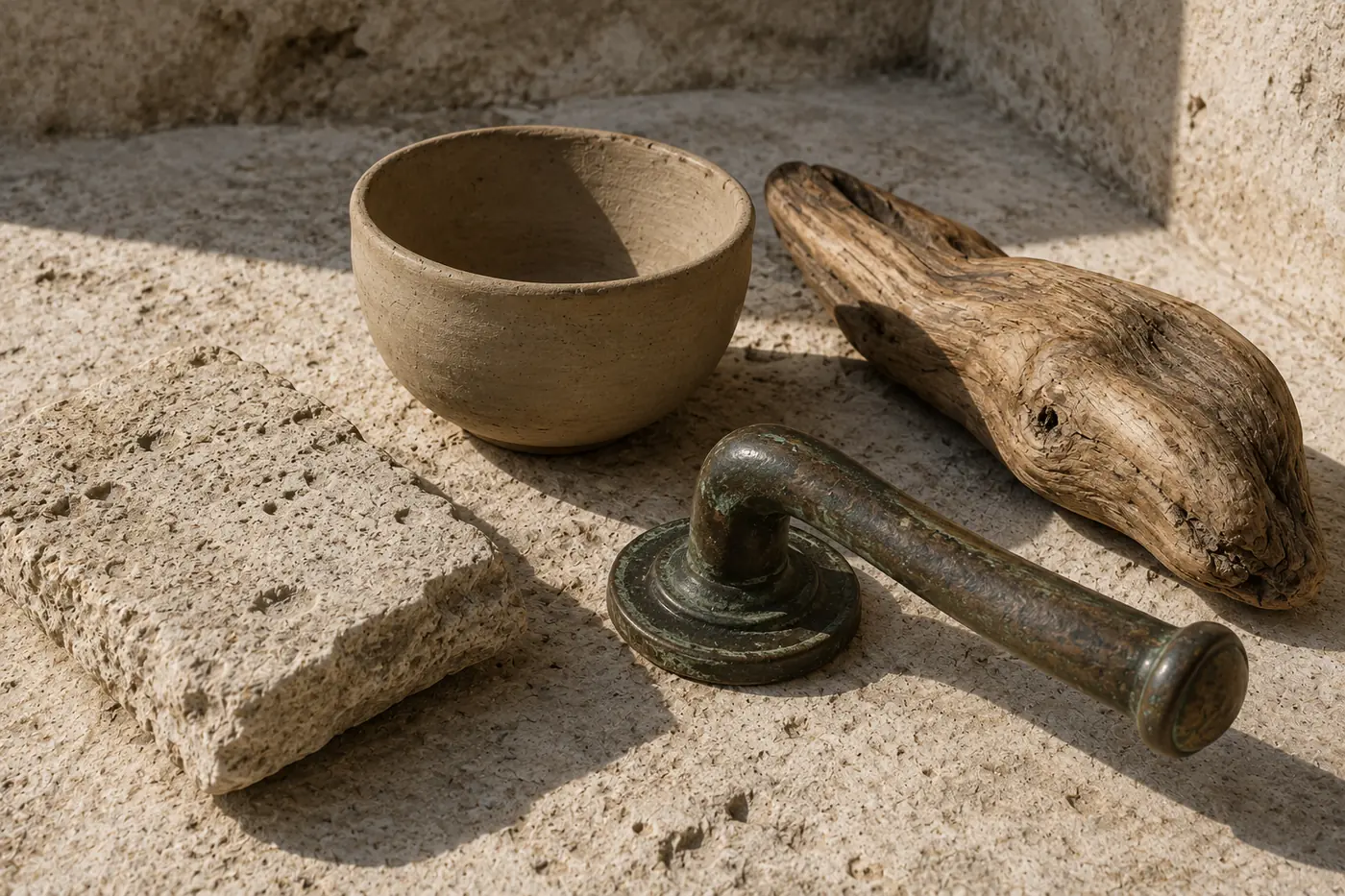
Every material carries a different relationship with time. Some fight it. Some conceal it. Some deteriorate because of it. Others seem to welcome it. As a landscape architect, I have always been drawn to the latter. Materials that record weather. Materials that gather memory. Materials that improve through use rather than despite it. They remind us that design is never finished on the day construction ends. Nor is an object complete when it leaves the studio. Its real life begins afterwards.
Contemporary culture often celebrates the new. Untouched surfaces.
Perfect finishes. Objects without marks. Yet landscapes teach a different lesson. The places we remember most are rarely pristine. They have been walked upon. Touched. Weathered. Occupied. They carry evidence of life. The same is true of materials.
Clay changes quietly. Its surface becomes smoother where hands return every morning. Its colour deepens with repeated use. Tiny variations begin to emerge that no firing could intentionally produce. The object slowly develops a relationship with the person using it. Its history becomes visible.
Stone behaves differently. It rarely changes quickly. Instead, it accumulates centuries. Footsteps polish stair edges. Rain softens sharp corners. Limestone slowly records climate. Granite retains the memory of countless seasons. The transformation is almost invisible from one day to the next.
Yet over decades it becomes profound.
Wood speaks another language. It responds continuously to moisture and sunlight. Fresh timber carries warmth and colour. Years later it becomes silver. Its grain opens. Its surface softens. The material accepts exposure rather than resisting it. It grows quieter with age.
Bronze teaches perhaps the most generous lesson. Its colour is never fixed. Air. Rain. Salt. Touch. Each leaves another layer. The patina is not damage. It is biography. No two bronze surfaces age identically. Every environment writes a different story.
Landscape architecture has taught me to appreciate these transformations. We rarely ask how a material looks today. We ask how it will look in twenty years.
Will it weather gracefully? Will it become richer? Will it still belong to the place? Time becomes another design material. Perhaps the most important one.
This perspective has fundamentally changed the way I think about objects. I am not interested in preserving perfection. Perfection is static. Life is not. A ceramic vessel should collect traces of everyday rituals. A wooden spoon should become smoother through use. A bronze handle should become brighter where it is touched most often. These changes do not reduce value. They create it.
Perhaps this is why I avoid materials that attempt to remain permanently flawless. Surfaces that resist every mark. Finishes that promise eternal perfection. They deny one of the most meaningful qualities of design. Its ability to accompany life. To change alongside the people who use it. To become familiar.
The Mediterranean has always understood this relationship. Ancient stone steps remain beautiful because millions of footsteps have polished them.
Olive wood grows richer after decades of handling. Bronze acquires a softness impossible to manufacture. Clay vessels carry the memory of countless shared meals. None of these materials seek permanence through resisting time. They achieve permanence by accepting it.
Perhaps this is why I continue choosing natural materials. Not because they are nostalgic. Not because they are traditional. But because they remain honest. They reveal their age rather than hiding it. They invite care. They reward patience. They remind us that beauty is rarely created in a single moment. It is accumulated. Slowly. Quietly. Through everyday life.
When I design an object, I often imagine meeting it again twenty years from now. Will it still feel relevant? Will it have become softer? Will it carry the marks of someone's daily rituals? Will it tell a story that only time could have written? Those questions matter more to me than whether it appears perfect today.
Perhaps the most sustainable object is not the one that lasts forever. It is the one nobody wants to replace.