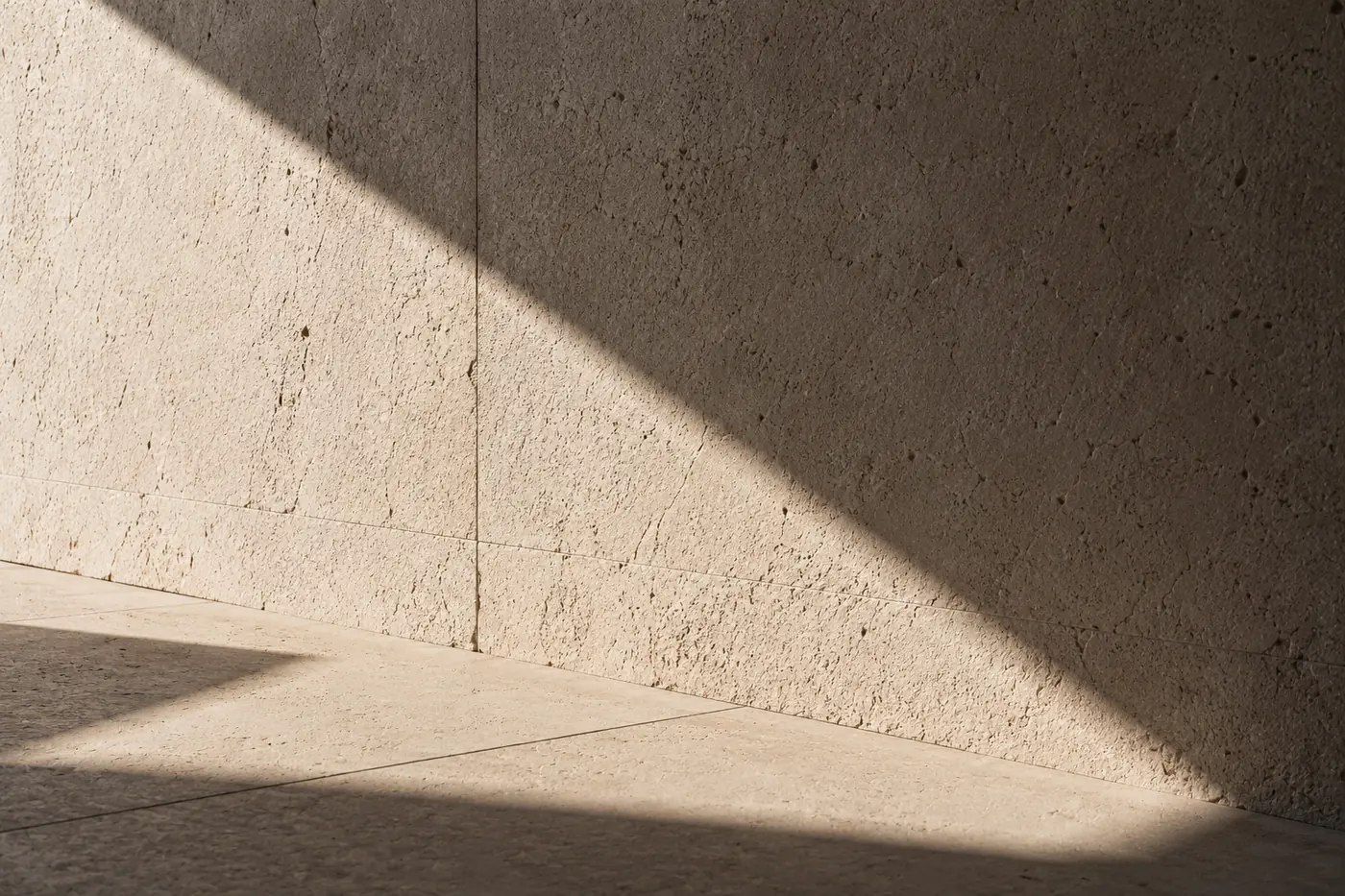
Most ceramic objects begin with clay. Mine do not.
Before there is a vessel, a bowl or a cup, there is a landscape. A walk. A shadow. The texture of limestone after rain. The way dry grasses move before the wind reaches the sea. The temperature beneath a tree at midday. Water collecting along the edge of a path. A retaining wall shaped by decades of weather.
These observations come first. Clay comes later.
For more than fifteen years, I have worked as a landscape architect, designing public spaces shaped by climate, vegetation, water and geology. My work has always begun by understanding how a place functions before deciding how it should look.
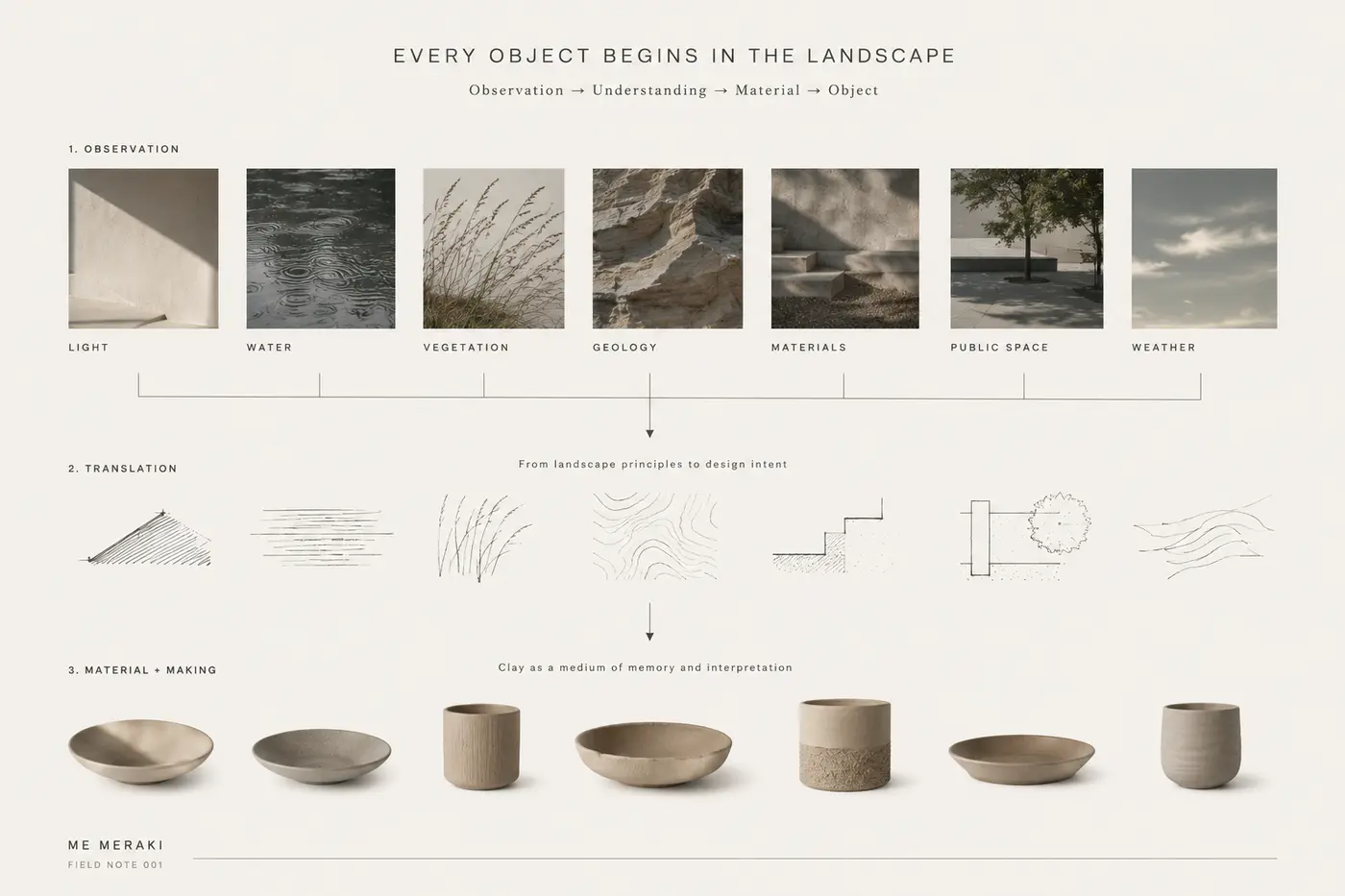
The same approach guides Me Meraki. Every object begins with observation rather than intention. Instead of asking "What should I make?", I begin with different questions.
How does Mediterranean light alter the perception of a surface? Why do certain materials become more beautiful as they weather? How does water reveal the geometry of a place after rainfall? What makes a stone wall feel timeless? How does wind become visible through movement rather than form?
These are landscape questions. Ceramics simply become another way of exploring them.
The wheel is not the starting point. Neither is the kiln. The process begins outside.
It begins by walking slowly through landscapes, paying attention to details that most people pass without noticing: the sharp edge of a limestone step, the changing colour of dry soil after the first rain, the long afternoon shadow cast across a white wall, the polished surface of marble worn by thousands of footsteps.
These moments are collected as field notes. Some become sketches. Some become photographs. Others remain only as observations.
Only after the landscape has been studied does the material process begin.
Clay is never asked to imitate nature. Instead, it records an understanding of it.
A curve may emerge from the profile of a hillside. A surface may echo weathered stone. A proportion may recall the quiet balance of a Cycladic courtyard. An edge may borrow its precision from an architectural detail rather than from another ceramic object.
The goal is not to reproduce landscapes in miniature. It is to translate the principles that shape them. This distinction is fundamental.
Landscape architecture has taught me that good design rarely begins with expression. It begins with careful observation. The most meaningful interventions are often the quietest ones—those that reveal qualities already present in a place rather than imposing new ones upon it.
I believe the same is true for everyday objects. A ceramic bowl can carry the memory of light. A vessel can express the stillness of a sheltered courtyard. A cup can embody the restraint of Mediterranean architecture without ever depicting it.
The object does not represent the landscape. It belongs to the same way of thinking.
That is why Me Meraki is organised into Studies rather than collections. Each Study investigates a single phenomenon—surface, shadow, wind, topography, limestone or rainwater—through observation, documentation and material experimentation. The ceramic objects are simply one outcome of that investigation. There may be others.
In time, the practice may expand beyond clay into stone, furniture, lighting or installations. The medium is free to evolve. The method remains constant.