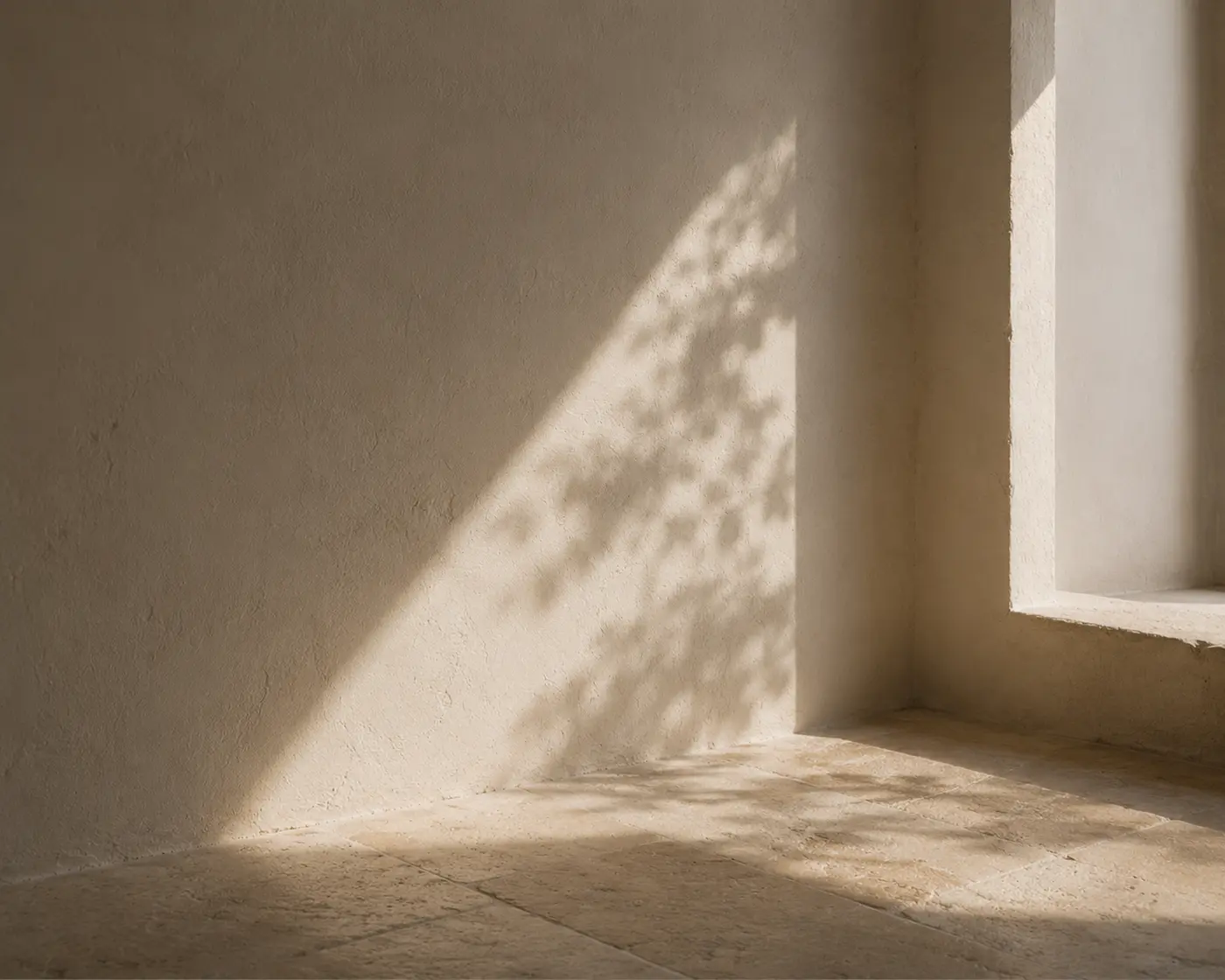
There are places we remember without immediately knowing why. A shaded courtyard where conversation naturally slows. A long stone bench overlooking the sea. A library where every sound feels softer. A kitchen filled with morning light. Nothing extraordinary appears to be happening. Yet something feels remarkably calm. Landscape architects describe this quality as atmosphere. It cannot be measured. It cannot be drawn. Yet it often becomes the most memorable part of a place.
Atmosphere is rarely created by a single object. It emerges through relationships. Light entering a room.
The texture of a wall. The distance between two chairs. The sound of leaves moving outside an open window. The coolness of stone beneath bare feet. The absence of unnecessary noise. Designing atmosphere therefore means designing conditions rather than spectacles.
Landscape architecture has taught me that the most successful places rarely compete for attention. They allow people to become more aware of themselves, of others and of the landscape around them. A public square should encourage conversation rather than interrupt it. A garden should make silence feel comfortable. A shaded path should slow walking without asking us to notice why. These qualities are difficult to describe. Yet we immediately recognise them when they exist.
Perhaps objects can work in the same way. A ceramic bowl should never become the loudest element on a table. It should quietly support the ritual taking place around it. Holding fruit. Serving food. Collecting flowers. Waiting empty until tomorrow morning. Its purpose is not performance. Its purpose is presence.
This idea has gradually shaped the way I design. I rarely imagine an object photographed in isolation. Instead, I imagine it already living somewhere. On a limestone countertop. Beside an open window. On a wooden table beneath afternoon light. Next to linen softened through years of washing. The object belongs to an atmosphere long before it belongs to a collection.
Mediterranean architecture offers remarkable lessons in this quiet generosity. Rooms are rarely defined by abundance. White walls. Stone floors. Filtered light. Natural materials. Open windows. The architecture leaves space for daily life to unfold. Nothing competes with it. Everything supports it. Perhaps this is why these interiors continue to feel contemporary centuries later. Their calm comes from proportion rather than decoration.
Objects should aspire to the same quality. Not to dominate. Not to decorate. But to contribute.
A vessel can soften a room simply through its proportion. A bowl can organise a table without becoming its centrepiece. A cup can make a morning ritual feel slightly more intentional. The influence is subtle. Yet it is real.
Landscape architecture constantly reminds us that people rarely remember individual design elements. They remember how a place made them feel. Comfortable. Welcome. Protected. Curious. Peaceful. Objects deserve the same ambition. Perhaps the greatest compliment is not that someone notices them. Perhaps it is that someone misses them when they are gone.
Working with clay reinforces this understanding. Clay possesses a quiet confidence. It absorbs light rather than reflecting it. It invites touch. It sits comfortably beside stone, timber and linen. It rarely asks to become the centre of attention. Instead, it contributes to an atmosphere of warmth and calm. This feels profoundly Mediterranean.
Not because of style. But because of attitude.
I often think that the most generous object is one that quietly disappears into everyday life. Not because it lacks character. But because it has become indispensable. It belongs so naturally that its absence is felt more strongly than its presence. Landscape architecture teaches the same lesson. The best public spaces are often those we stop noticing because they have become part of our daily routines. They support life so completely that they feel inevitable.
Perhaps this is ultimately what Me Meraki hopes to create. Not decorative objects. Not collector's pieces. But companions for everyday life. Objects that make a room feel calmer. A meal feel slower. A conversation last longer. Objects that contribute to atmosphere without demanding attention.
Perhaps that is enough. Perhaps good design does not need to become the centre of a space. Perhaps its greatest achievement is simply helping a space become more itself.