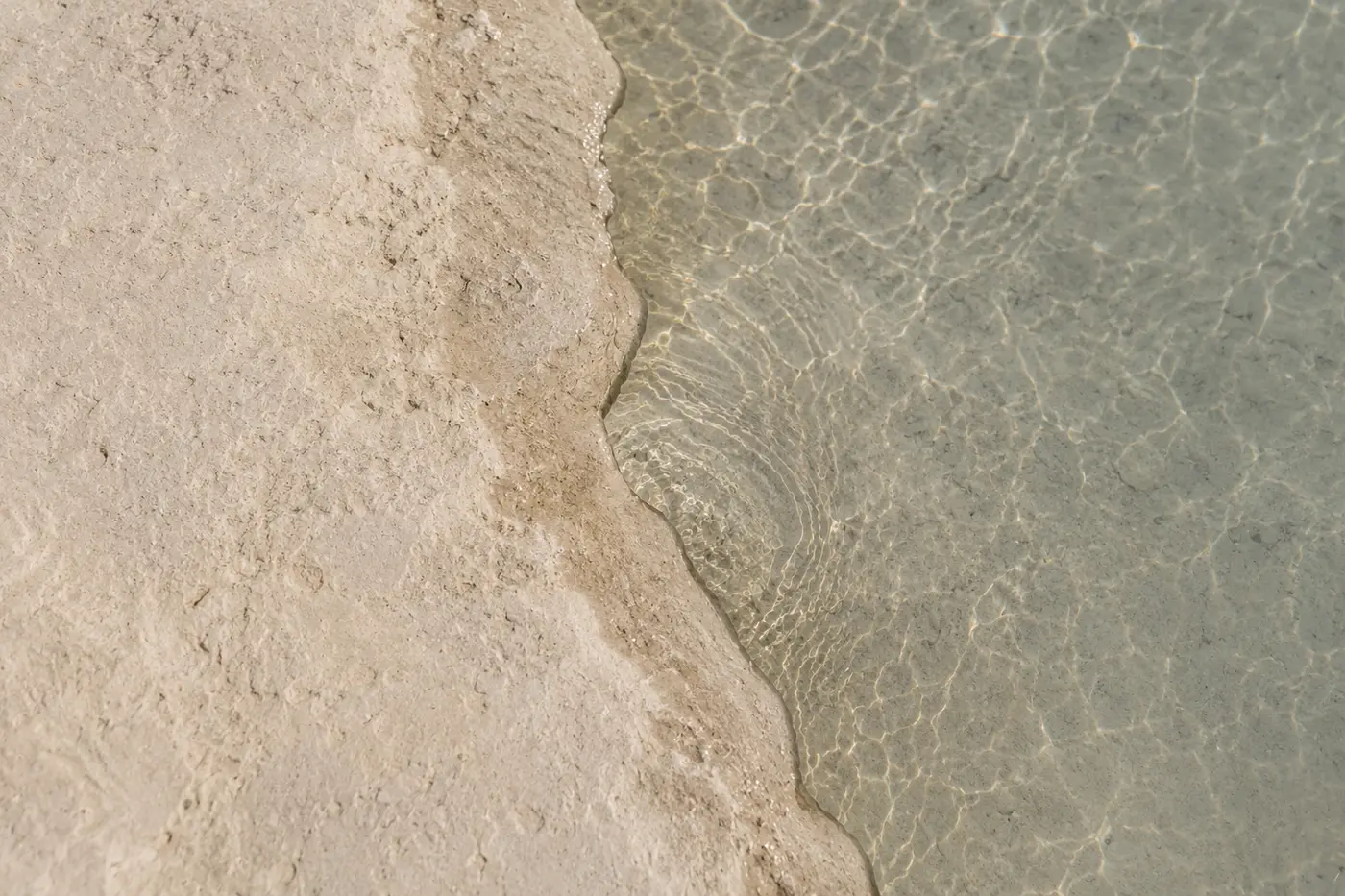
Landscape architects spend an extraordinary amount of time thinking about edges. Where pavement becomes planting. Where water meets land. Where public space becomes private. Where shade becomes sunlight. Where one material gradually gives way to another. Most people experience these moments without ever noticing them. For us, they are often the most important part of the project. Because landscapes rarely change abruptly. They change through transition.
An edge is never simply a line. It is a negotiation. A shoreline rises and falls with the tide. A forest slowly dissolves into an open meadow.
A gravel path softens into earth. A curb separates movement from stillness. These moments are not boundaries. They are conversations between two conditions. Good landscape architecture designs those conversations carefully.
Perhaps this is why I became fascinated by rims long before I realised it. The rim of a bowl is also an edge. It separates inside from outside. Containment from openness. Object from hand. Liquid from air. Like a shoreline, it defines where one condition ends and another begins. Its geometry appears simple. Its responsibility is enormous.
Everyday objects are full of thresholds. The point where fingers first meet a cup. The lip of a vessel. The curve where a plate meets a table. The transition between glazed and unglazed clay. These moments determine how an object is experienced. Often more than its overall shape. Landscape architects understand this instinctively. People rarely remember the dimensions of a square. They remember how it felt to enter it.
The Mediterranean offers countless examples of beautiful edges. Stone steps descending into the sea. Dry grasses meeting limestone. Olive groves dissolving into agricultural terraces. A white wall casting a sharp shadow onto a dusty path. None of these conditions are isolated. They exist because two different worlds meet. The beauty lies within the transition.
This understanding has gradually shaped the way I work with clay. I spend as much time thinking about the edge of an object as its body. Should the rim feel crisp or soft? Should it disappear visually or become slightly pronounced? Should the transition invite touch or quietly recede? A millimetre changes everything. Just as moving a path half a metre can transform an entire public space.
Landscape architecture teaches another lesson. Edges are where ecological richness often appears. The edge of a woodland supports more species than its centre. The shoreline contains extraordinary diversity. Wetlands exist because land and water overlap. Transitions create opportunity. Perhaps objects behave similarly. The most meaningful experiences often occur at points of contact.
Where hand meets clay. Where lips meet the rim. Where light meets texture. Where shadow meets form. The edge becomes the place where interaction begins.
There is a temptation in design to seek perfect definition. Perfect boundaries. Perfect separation. Nature rarely behaves this way. Its edges blur. They overlap. They evolve. They invite exchange. This generosity has become an important lesson for me. Objects, too, can possess gentle transitions. A curve that appears almost inevitable. A profile that quietly guides the hand rather than instructing it. An edge that feels discovered rather than imposed.
Perhaps this is why I think the rim of a bowl deserves the same attention as the edge of a public square. Both determine how people arrive. How they engage. How they leave. Both shape experience through tiny decisions that often remain invisible.
The better they are designed, the less we notice them.
Landscape architecture has taught me that transitions deserve as much attention as destinations. The same is true for objects. Sometimes the most important part is neither the inside nor the outside. It is the place where they meet.