People often describe my work as simple. Minimal. Quiet. Restrained. I understand why. The forms are uncomplicated. The colours are muted. The materials rarely compete for attention. Yet simplicity is perhaps the most misunderstood word in design. Simple does not mean easy. Simple does not mean empty. Simple does not mean less work. Quite the opposite. Simplicity is usually the result of removing everything that is unnecessary until only the essential remains.
Landscape architecture teaches this lesson very early. When approaching a site, the first instinct is rarely to begin adding. Instead, we begin by observing. What already works? What should remain untouched? Which existing trees should stay? Where does water already move naturally? How do people already use the space? What qualities would disappear if we intervened too much? Sometimes the best design decision is restraint.
This way of thinking has gradually shaped the way I approach objects. Every new curve carries responsibility. Every texture changes the whole. Every additional detail asks a question. Is it necessary? Or is it decoration? These are two very different things.
Decoration attracts attention. Design creates relationships. Decoration asks to be noticed. Design quietly improves everyday experience. One often speaks about itself. The other speaks about the people using it.
Landscape architecture constantly reminds us of this distinction. A successful public space is rarely memorable because of a spectacular object. It is memorable because it feels comfortable. Because people naturally choose to stay. Because movement feels intuitive. Because shade appears where it is needed. Because materials age gracefully. Good landscapes rarely announce themselves. They simply work.
Perhaps this is why I find myself removing more than adding. A sharper edge becomes softer. An exaggerated curve becomes quieter. A decorative texture disappears entirely. Every subtraction allows something else to become visible. Light. Shadow. Material. Proportion. The object begins to breathe.
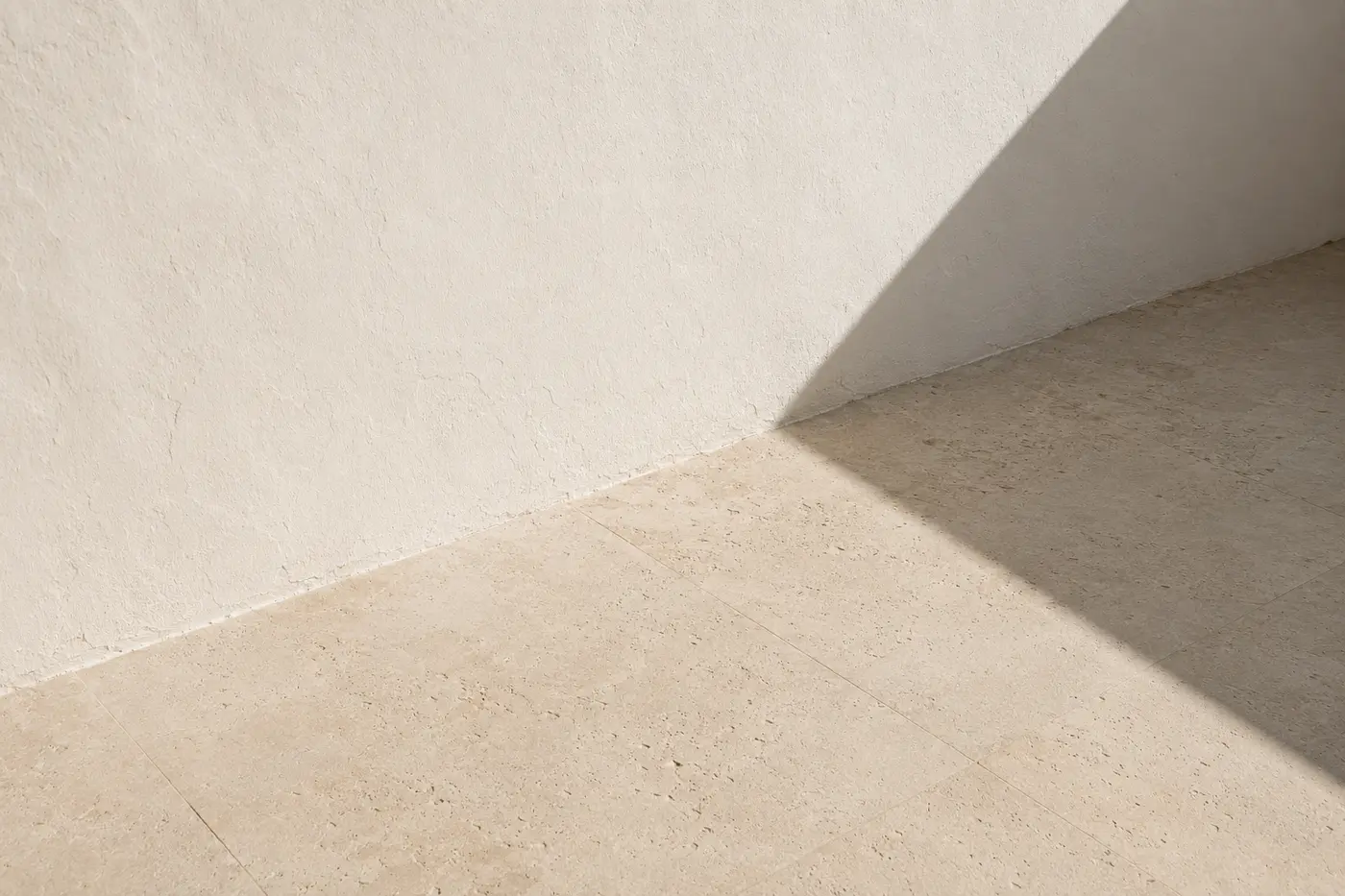
The Mediterranean has always understood restraint. Traditional architecture across the region rarely depends on ornament. Its beauty comes from proportion. From carefully placed openings. From the relationship between wall and shadow.
From stone meeting sky. From climate shaping form. The result feels inevitable rather than expressive. Nothing appears accidental. Nothing appears excessive.
This principle has little to do with minimalism as a style. Minimalism can easily become another aesthetic language. Restraint is something different. It is an attitude. It asks whether every decision contributes meaningfully to the whole. It accepts that silence can be more powerful than complexity. It understands that absence is also a design tool.
Working with clay reinforces this lesson. The material is remarkably honest. It exposes every unnecessary gesture. A surface does not become stronger because it contains more detail. A vessel does not become more meaningful because it has a more complicated profile. Often, the opposite is true. The fewer decisions an object asks the viewer to process, the more clearly its essential qualities emerge. Material. Weight. Balance. Touch.
These become enough.
Landscape architecture has taught me that places become memorable through experience rather than appearance. We remember the coolness beneath an old plane tree. The sound of water moving through a narrow channel. The warmth of limestone after sunset. The quiet of a shaded courtyard. These memories are rarely spectacular. They are subtle. Repeated. Comforting. Objects can work in the same way. Their purpose is not to dominate a room. It is to quietly become part of someone's everyday rituals.
Perhaps this is why I no longer think of simplicity as an aesthetic choice. I think of it as respect. Respect for the material. Respect for the landscape. Respect for the person who will live with the object. Respect for the idea that good design does not always ask for attention. Sometimes it simply creates the conditions for everything else to feel right.
Design is often described as the act of creating. Landscape architecture has taught me something slightly different.
It is equally the discipline of deciding what can be left out. That is where simplicity becomes difficult. And that is where it becomes meaningful.