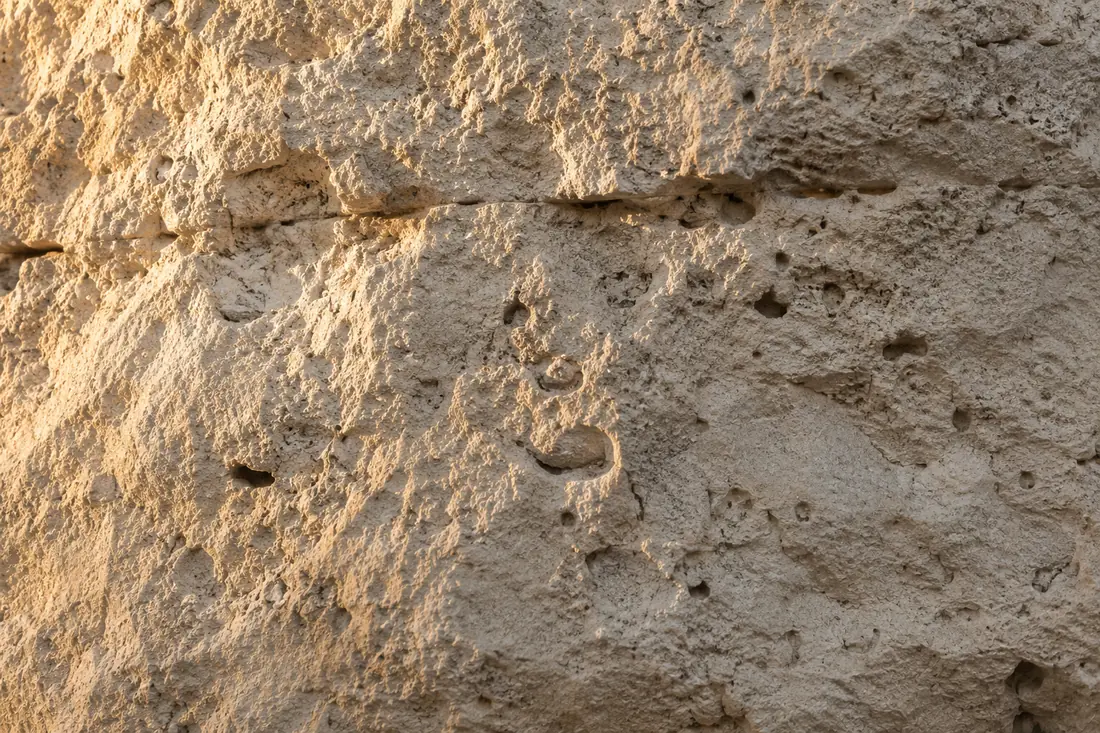
Some materials ask to be admired. Limestone asks to be understood. It rarely announces itself. Its colours are quiet. Its texture is subtle. Its beauty often reveals itself only after years of exposure to sun, wind, rain and touch. Perhaps this is why I continue returning to it. Not because it is spectacular. But because it demonstrates a different understanding of time.
Landscape architects rarely think of materials as finished. Every material begins changing the moment it enters the landscape. Concrete develops stains. Steel oxidises.
Timber silvers. Stone softens. Vegetation slowly occupies joints and edges. Weather begins designing immediately. Good materials accept this collaboration. Poor materials resist it.
Limestone has spent millions of years learning patience. Its surface records everything. Water slowly dissolves it. Wind smooths it. Footsteps polish it. Salt leaves crystalline traces. Tiny fractures deepen. Edges soften. None of these processes diminish the material. They complete it.
Perhaps this is what fascinates me most. Limestone never appears concerned with perfection. It accepts weathering as part of its identity. It understands that permanence is not achieved by remaining unchanged. It is achieved by changing well. Mediterranean architecture has quietly understood this principle for centuries. Stone walls become richer through age. Courtyards become smoother through use.
Steps become polished by generations of movement. The buildings become more themselves over time. Not less.
This way of thinking has influenced how I approach clay. I am less interested in creating flawless surfaces than in creating surfaces capable of ageing with dignity. Tiny variations. Soft textures. Subtle irregularities. These are not imperfections waiting to be corrected. They are invitations for time to continue the design. An object should never feel complete on the day it leaves the studio. Like a landscape, it should continue its life with the people who use it.
Landscape architecture constantly reminds us that materials are experienced through touch as much as vision. The coolness of stone beneath a hand. The roughness of a retaining wall. The smooth edge of worn limestone steps. These tactile qualities often remain in memory longer than visual ones. Texture is not decoration. It is information. It tells us how a material has lived.
There is another lesson limestone quietly offers. Restraint.
Unlike polished marble, limestone rarely dominates a space. It provides a calm background against which light, vegetation and architecture can become more expressive. It understands the value of supporting rather than competing. Perhaps this is why it has remained one of the defining materials of Mediterranean landscapes for thousands of years. Its confidence comes from not demanding attention.
I hope the objects developed through Me Meraki possess something of this same character. Not by resembling stone. But by sharing its attitude. Quiet. Honest. Comfortable with age. Able to reveal more through years of use than through first impressions. Objects that invite touch. Objects that become softer rather than louder. Objects that understand that beauty is not always immediate. Sometimes it arrives slowly.
Limestone reminds me that design does not end when an object is finished. It begins when it enters everyday life. That first meal. The first cup of coffee. The first tiny mark left by use. Like stone in a landscape, the object slowly accumulates memory. It becomes inseparable from the rituals around it.
Perhaps that is the greatest lesson limestone offers. Lasting design is rarely created by seeking perfection. It is created by allowing time to become a collaborator.