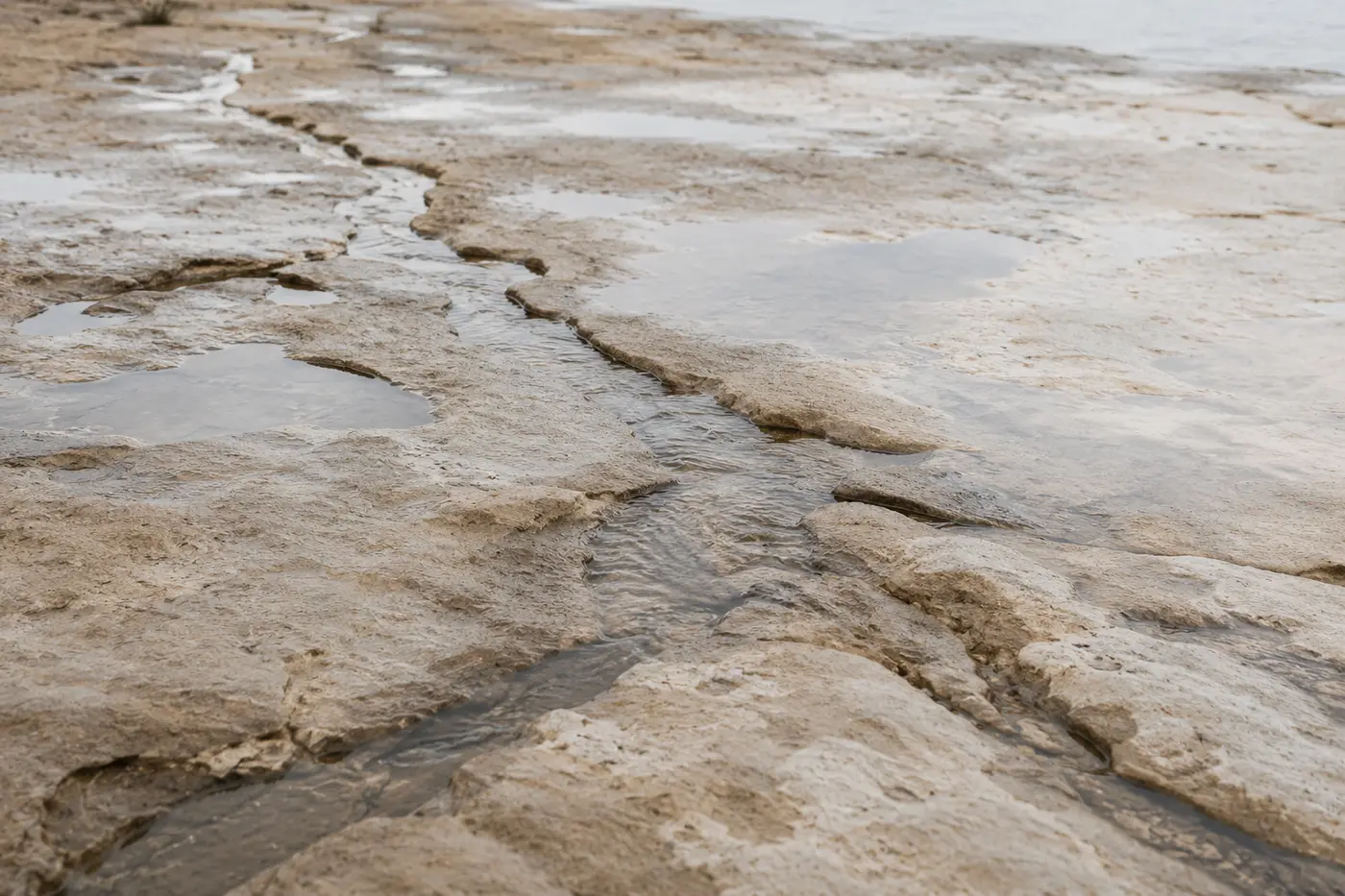
Long before I began working with clay, I learned to think through water. As a landscape architect, water is never simply an environmental issue. It is one of the primary forces that shapes every landscape. It decides where vegetation grows. It carves valleys. It deposits sediment. It leaves traces on stone. It reveals topography. It transforms materials over time. Even when it disappears, its path remains visible. Water always tells the truth about a place.
One of the first lessons in landscape architecture is surprisingly simple. Never ask where water is.
Ask where it wants to go. Every site has its own logic. Some absorb. Some retain. Some overflow. Some resist. Some reveal hidden pathways only during heavy rain. Design begins by understanding these invisible systems rather than trying to control them. The most resilient landscapes are those that cooperate with water rather than oppose it.
This way of thinking has stayed with me. Today, I find myself asking similar questions of everyday objects. Not where water should sit. But where it naturally wants to move. How does it collect? How does it escape? How does it leave a mark? How does it transform a surface over time? These questions belong equally to landscapes and to ceramics.
The Mediterranean offers endless lessons in reading water. For months, a stream may appear completely dry. Then, after the first autumn storm, it suddenly remembers its course. Stone darkens. Soil softens. Tiny channels become visible.
Dust disappears. The landscape reveals information that was always present, but temporarily hidden. Water makes the invisible visible.
Perhaps this is why I have always been fascinated by traces. The faint mineral ring left after evaporation. The darker tone where rainwater lingers longest. The polished edge shaped by countless years of flowing water. These are not imperfections. They are records. Evidence that a material has lived. Landscape architects rarely seek permanence through resisting change. Instead, we often design for transformation. Rain gardens fill and empty. Bioswales alternate between dry and wet. Retention basins become public spaces until water returns. Good landscapes accept cycles rather than fixed states. This understanding has profoundly influenced the way I think about objects.
A ceramic vessel is, after all, another place where water lives. It is filled. It is emptied. It evaporates. It leaves subtle traces behind. Each use becomes another layer in the object's history. The object is never completely finished.
It continues to evolve through everyday rituals. Perhaps this is why I am less interested in perfect surfaces than in honest ones. Surfaces that accept time. That acknowledge use. That become richer through interaction rather than poorer.
Water also teaches restraint. It never takes a direct route simply because it appears shorter. It follows gravity. It negotiates obstacles. It slows. It accelerates. It infiltrates. It overflows. Its intelligence lies in adaptation rather than force. Good design often works the same way. The most successful solutions are rarely those that impose themselves upon a place. They are those that quietly respond to existing conditions.
This philosophy extends beyond landscape architecture. It has become a way of thinking. Observe before intervening. Understand before shaping. Allow processes to reveal themselves before deciding how they should change. Whether designing a public square or a small ceramic bowl, the sequence remains remarkably similar.
The landscape teaches first. The object responds afterwards.
For me, water is therefore not simply a material. It is a teacher. It has taught me that movement leaves memory. That patience creates form. That time is part of every design process. And that the most meaningful traces are often the ones that cannot be planned.