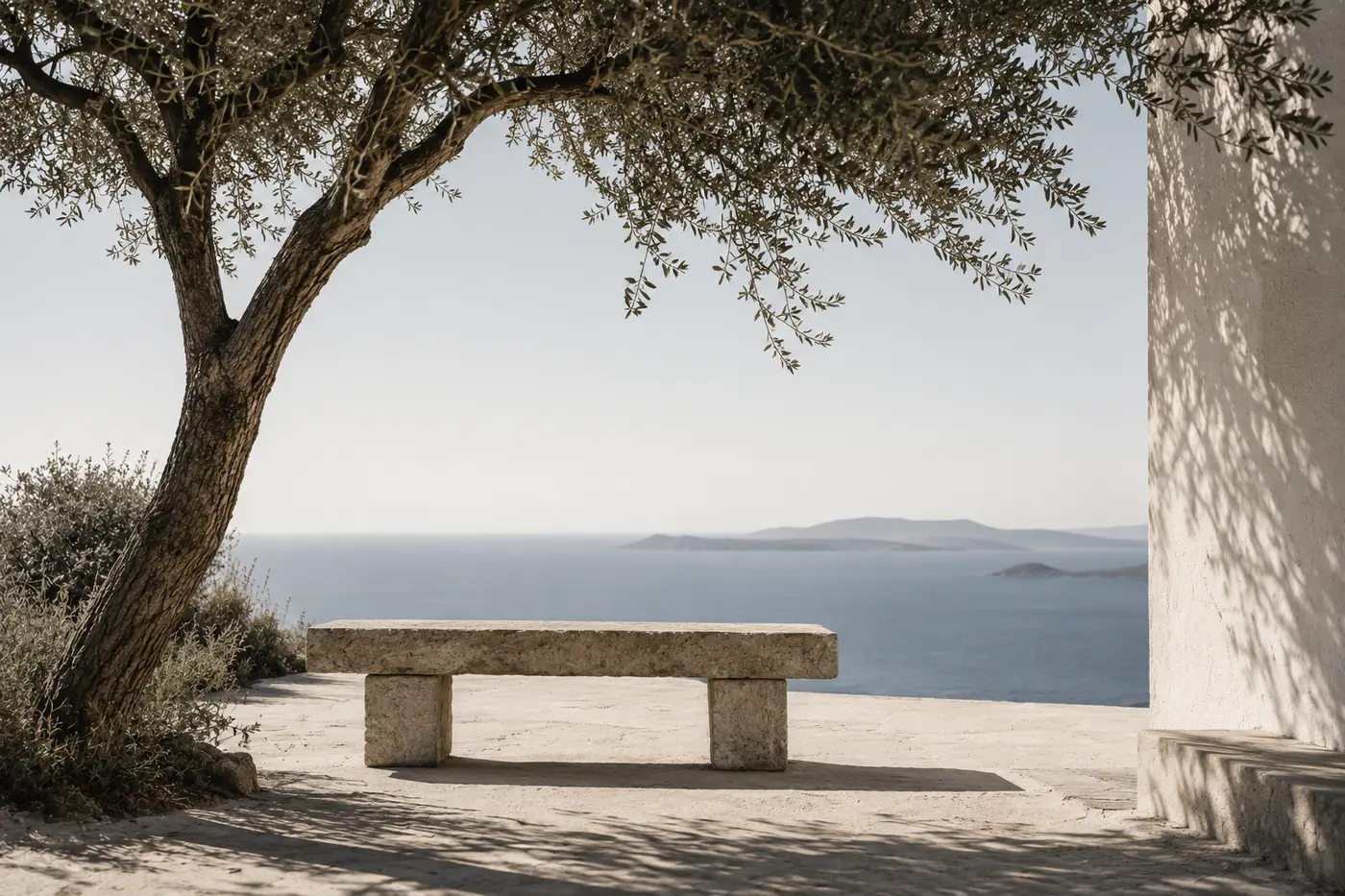
Landscape architects rarely design isolated objects. We design relationships. A bench is never simply a bench. Its dimensions matter, but so do its surroundings. Where does it face? What does it overlook? Is it placed beneath a tree or exposed to the afternoon sun? How close is it to water? Does it encourage conversation or solitude? The object itself is only one part of the design. Its meaning is created through its relationship with the landscape. This way of thinking has fundamentally changed how I approach ceramics. Rather than asking "What should this object look like?", I ask a different question. Where does this object belong? Not geographically. Spatially. Atmospherically.
A public square is not defined by its paving alone. It is the careful balance between open space and enclosure.
Between movement and pause. Between vegetation and architecture. Between light and shade. The same principles exist at a much smaller scale. A bowl sits on a table. A cup rests in the hand. A vessel occupies a shelf. They too exist within relationships. To architecture. To light. To other materials. To the rituals of everyday life. Designing them requires the same attention to context.
In landscape architecture, every element contributes to the atmosphere of a place. A single tree can change how a square is experienced. A low wall can invite people to sit without ever announcing itself as seating. A change in paving can slow movement. A carefully positioned bench can transform an empty space into a destination. These interventions are often quiet. Their success comes not from attracting attention, but from belonging so naturally that they seem inevitable. I believe everyday objects should aspire to the same quality.
The most memorable objects rarely demand attention. Instead, they settle comfortably into their surroundings.
They become part of daily life without becoming invisible. They age alongside the materials around them. They gather traces of use. They become familiar. This is not accidental. It is the result of designing for longevity rather than novelty. Landscape architects understand that places improve through time. Stone becomes smoother. Timber silvers. Metal develops a patina. Vegetation matures. The design is completed not when construction ends, but through years of weather and use. Ceramics share this same potential. A vessel can record years of handling. A cup develops subtle marks where fingers repeatedly meet its surface. Clay, like stone, carries memory. The object evolves through everyday rituals. It becomes part of a place.
This is why I am less interested in creating decorative objects than in creating objects that belong. Objects that feel inevitable rather than expressive. Objects that quietly support everyday life. Objects that could exist in a white Cycladic house, a contemporary apartment in Copenhagen, or a shaded courtyard in Athens without needing to change their identity. Their relationship with architecture matters as much as their form. Their proportion matters as much as their texture.
Their silence matters as much as their presence.
Perhaps this is where landscape architecture and ceramics unexpectedly meet. Both disciplines are ultimately concerned with how people inhabit space. One works at the scale of cities, parks and public squares. The other works at the scale of the hand. Yet the questions remain remarkably similar. How does an object invite use? How does it encourage pause? How does it contribute to atmosphere? How does it become part of everyday life without demanding constant attention? These are not questions of style. They are questions of belonging.
Me Meraki does not seek to create objects that represent landscapes. It seeks to create objects that behave like landscapes. Quiet. Generous. Timeless. Comfortable to inhabit. Able to improve through time.
Perhaps the best ceramic object is like the best bench in a public square. People do not remember it because it was extraordinary. They remember it because, without noticing, it became exactly where they wanted to be.